

Oral cancer is one of the most common and preventable cancers in India, yet it continues to pose a serious public health challenge. Every year, thousands of lives are affected not because treatment isn’t available, but because the disease is often detected too late.
Raising awareness and strengthening early screening practices can significantly change this reality.
The Growing Burden of Oral Cancer
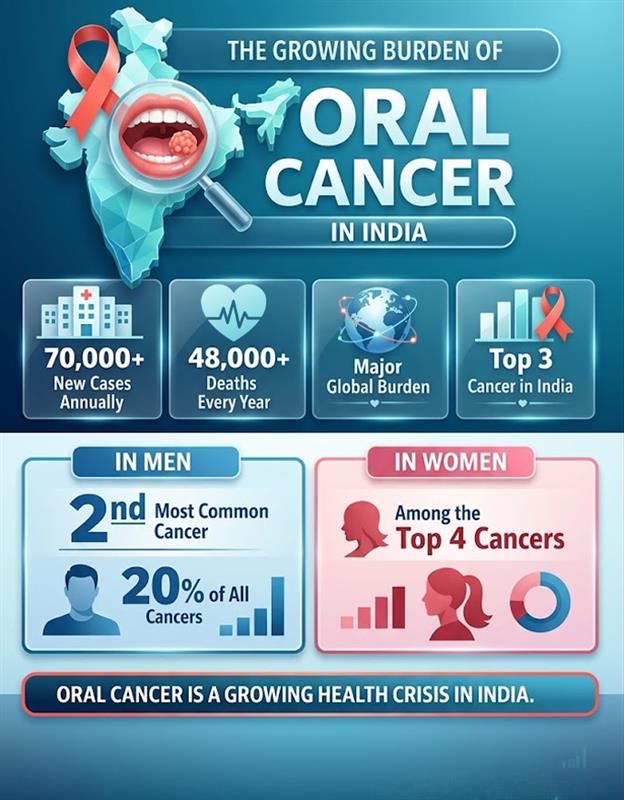
The numbers clearly highlight the severity of oral cancer in India:
- ~70,000 new oral cancer cases are reported every year in India
- More than 48,000 deaths occur annually due to oral cancer
- India contributes to a significant share of global oral cancer cases, with estimates suggesting a major global burden
- Oral cancer is among the top 3 cancers in India, accounting for a large proportion of total cancer cases
In men, oral cancer is:
- The 2nd most common cancer, contributing up to 20% of all cancers
In women:
- It ranks among the top 4 cancers, showing its widespread impact across populations
Late Diagnosis - The Biggest Challenge
One of the most critical issues is that oral cancer is often detected too late.
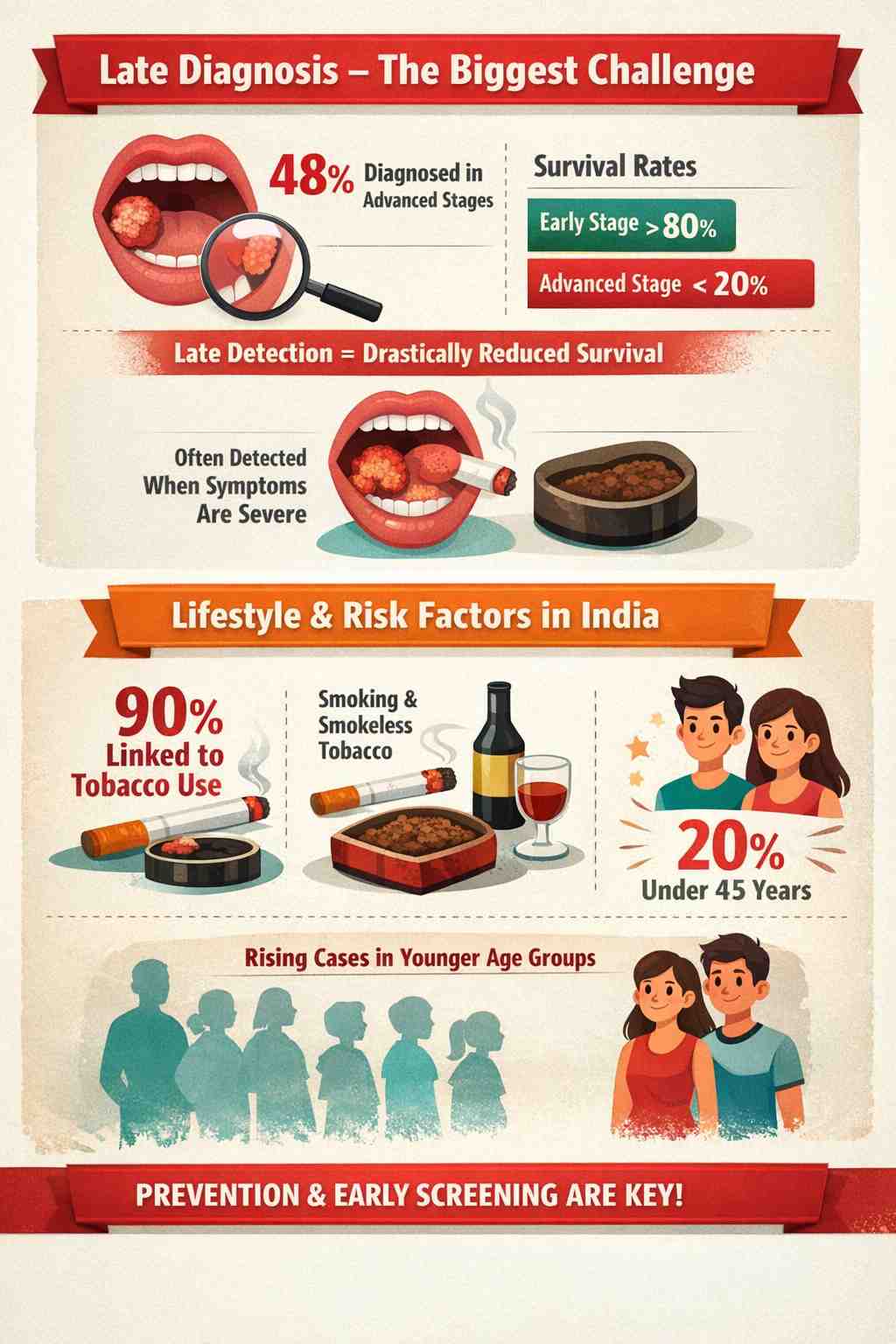
- Nearly 48% of cases are diagnosed at advanced stages
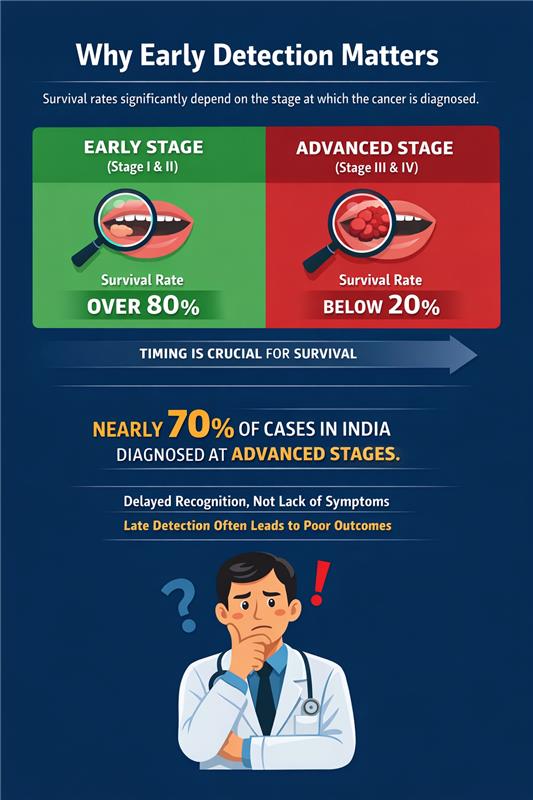
- Early-stage survival rates can exceed 80%, but drop to below 20% in advanced stages
This gap clearly shows that timing of detection directly impacts survival.
Despite the oral cavity being easily accessible for examination, a majority of cases are still identified only when symptoms become severe.
The Role of Lifestyle and Risk Factors
India’s high oral cancer burden is closely linked to lifestyle patterns:
- Over 90% of oral cancer cases are associated with tobacco use
- Tobacco consumption (smoking and smokeless forms) remains the primary risk factor
- Alcohol consumption further increases risk
- Changing lifestyle habits are now causing a rise in younger populations
- Alarmingly
- Around 20% of cases are now seen in people under 45 years, showing a shift toward younger age groups
Why Early Detection Matters
The most critical factor influencing survival is the stage at which the cancer is diagnosed.
One of the most critical issues is that oral cancer is often detected too late.
- Nearly 48% of cases are diagnosed at advanced stages
- Early-stage survival rates can exceed 80%, but drop to below 20% in advanced stages
This gap clearly shows that timing of detection directly impacts survival.
Recognizing Early Signs
Oral cancer often begins with subtle, painless symptoms that are easy to overlook:
- Non-healing Ulcers: Mouth sores or "chale" that do not heal within two weeks.
- Patches: Persistent red (erythroplakia) or white (leukoplakia) patches inside the mouth.
- Abnormal Growths: Lumps, swelling, or thickened areas on the tongue or cheeks.
- Functional Issues: Difficulty in chewing, swallowing, or restricted jaw movement (trismus).
The Importance of Routine Screening
The oral cavity is easily accessible, making screening one of the simplest medical exams available.
Why is screening is not yet a consistent practice ?
- Limited awareness among patients
- Lack of routine screening protocols
- Time constraints in clinical settings
- Low adoption of advanced diagnostic tools
Strengthening the Approach to Screening
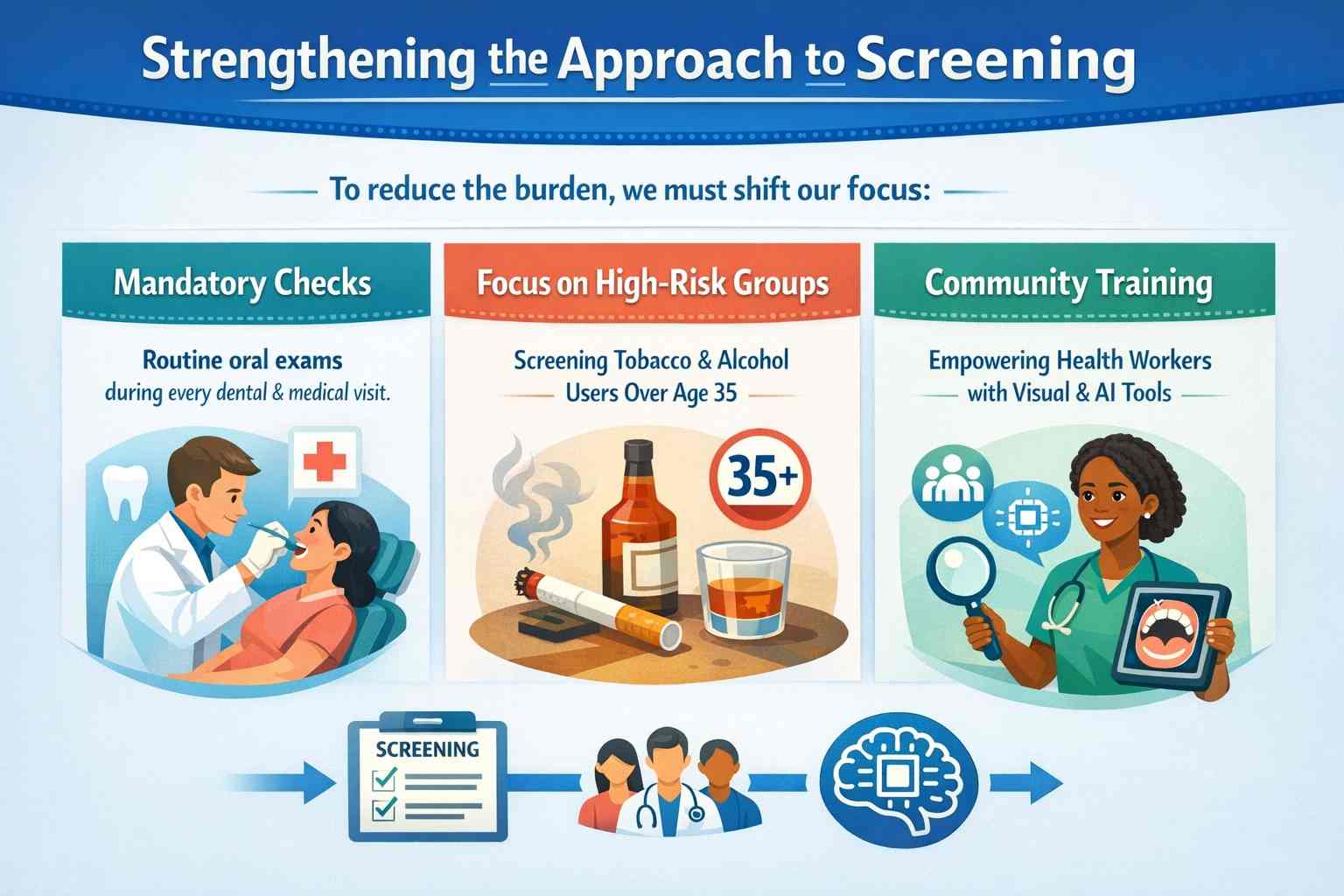
To reduce the burden, we must shift our focus:
- Mandatory Checks: Encouraging routine oral examinations during every dental and general medical visit.
- Focus on High-Risk Groups: Prioritizing screenings for tobacco and alcohol users above age 35.
- Community Training: Empowering frontline health workers to use basic visual inspection and AI-assisted tools.
Conclusion
Oral cancer is a growing concern in India, but it is also one of the most treatable cancers, if caught in time. The challenge lies not in the complexity of the treatment, but in the timeliness of the diagnosis.
By prioritizing awareness and integrating routine screening into our lives, we can flip the script on these statistics and save thousands of lives every year.
Early screening is not optional, it is essential.
